Top 10 Countries Where Commercial Surrogacy Is Fully Legal
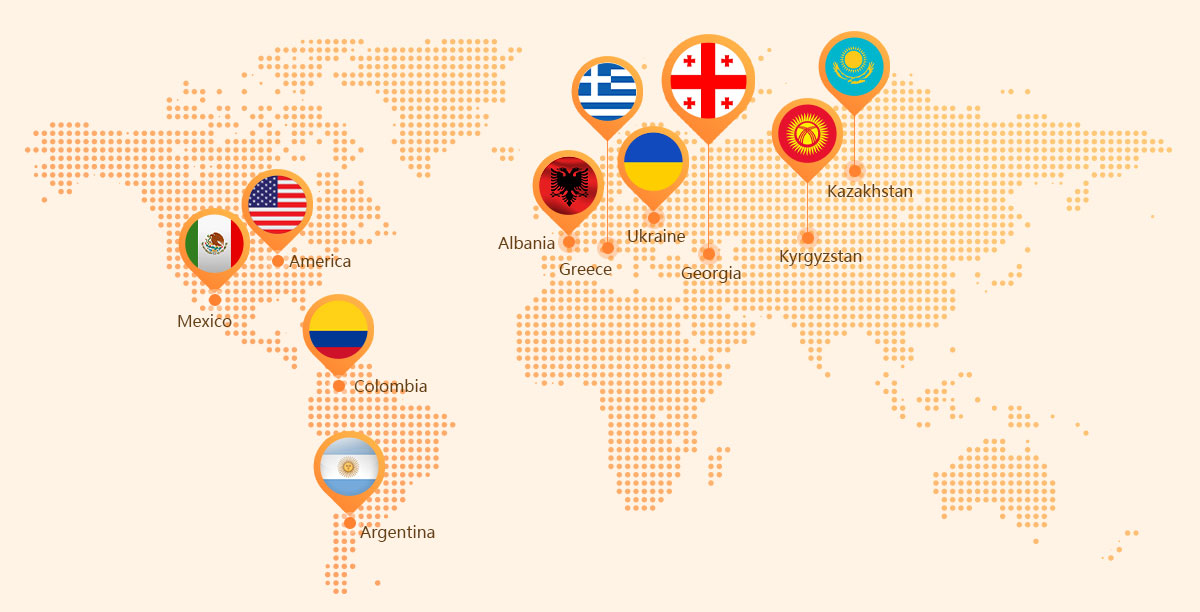
These countries permit compensated surrogacy and legally protect the intended parents' parental rights; the list is organized by degree of legal protection and operational maturity, in no particular order.

Georgia
★★★★★In Georgia, surrogacy is legal. Under the country's Law on Reproductive Health and related medical regulations, commercial surrogacy is protected by law. The 2026 policy update further removed the marriage requirement, allowing single individuals and same-sex couples to legally pursue third-party surrogacy. The law explicitly stipulates that the legal parents of a baby born through surrogacy are the intended parents; the surrogate mother holds no parental rights whatsoever, and the birth certificate records only the intended parents' names.
MORE >

Kyrgyzstan
★★★★☆In Kyrgyzstan, surrogacy is legal. Under Article 57 of the country's Law on the Protection of Citizens' Health, citizens — regardless of marital status — have the right to parent through third-party assisted reproduction. The law requires surrogacy to be based on a notarized contract, and the surrogate mother must be a woman aged 20–35 who has at least one healthy child of her own. After the child is born, the intended parents are registered directly with the civil registry office as the legal parents and enjoy full parental rights.
MORE >

United States
★★★★☆In the United States, surrogacy is not legal nationwide; instead, each state legislates independently, resulting in significant policy differences. Around 15 "surrogacy-friendly states" (such as California and New York) have laws that explicitly permit commercial surrogacy, allow intended parents to establish legal parentage before the child's birth, and protect the rights of single individuals and same-sex couples. However, some states (such as Michigan) explicitly prohibit compensated surrogacy or impose strict restrictions.
MORE >

Ukraine
★★★★☆In Ukraine, commercial surrogacy is legal. Under the country's Family Code and relevant orders of the Ministry of Health, surrogacy is available only to married heterosexual couples and requires a clear medical indication (such as absence of a uterus or a severe pathology). The law requires that at least one party have a genetic link to the child. The surrogate mother holds no parental rights; after the child is born, the intended parents are registered directly on the birth certificate as the legal parents, with no additional adoption or litigation procedure required.
MORE >
Kazakhstan
★★★☆☆In Kazakhstan, surrogacy is legal. Under the country's Law on Marriage and Family and related regulations, surrogacy is protected by law and is open to single individuals and foreign citizens. The law requires the surrogate mother to be aged 20 to 35, physically and mentally healthy, and to have at least one child of her own; if married, she must obtain her spouse's written consent. The surrogacy contract must be notarized, and after the child is born, the intended parents are registered directly by law as the legal parents.

Greece
★★★☆☆Under Law 3089/2002 and civil-code provisions, Greece permits only altruistic gestational surrogacy and strictly forbids paid commercial surrogacy, reimbursing only medical and lost-wage costs. A 2025 rule requires both intended parents and surrogate to be Greek permanent residents, with prior court permission; eligibility is limited to infertile heterosexual couples and single infertile women — same-sex couples and single men do not qualify. The surrogate must be under 54 and not supply the embryo herself.

Colombia
★★★☆☆Colombia sits in a 'legal vacuum'. The Constitutional Court has ruled surrogacy agreements are not expressly prohibited and protects equal parenting rights for singles and same-sex couples. Yet there is no dedicated law governing the contract, compensation or parenthood. In practice, intended parents usually must go through post-birth judicial procedures such as paternity litigation to be confirmed as legal parents.

Mexico
★★★☆☆Mexico has no federal surrogacy law; each state decides. Today only Tabasco and Sinaloa explicitly allow surrogacy, with strict limits on the intended parents' nationality and marital status. The Supreme Court's 2021 ruling that state bans on foreigners and same-sex couples are unconstitutional spurred international surrogacy. In most other states, surrogacy is a legal blank or explicitly banned.

Albania
★★★☆☆Albania has no dedicated surrogacy law; only the Reproductive Health Law 8876/2002 and Family Code Article 261 mention assisted reproduction, leaving surrogacy in a grey zone — neither expressly forbidden nor governed by compliance rules for paid surrogacy. In practice foreigners, single men and same-sex couples may pursue gestational surrogacy; compensation has no standard, parenthood often relies on adoption procedures, and registration varies by region, leaving intended parents without stable legal protection.

Argentina
★★★☆☆Argentina has no dedicated surrogacy statute; its Civil and Commercial Code treats the birth mother as the legal mother, surrogacy contracts are void, and paid commercial surrogacy is judged unlawful, with police often cracking down on cross-border surrogacy networks. A 2024 Supreme Court ruling explicitly voided surrogacy agreements: regardless of the parents' nationality, custody defaults to the birth mother, and foreigners cannot lawfully register parenthood. Only unpaid altruistic assistance is allowed, with a very high practical bar.

Countries & Regions Where Altruistic Surrogacy Is Legal
Only reasonable expenses may be reimbursed; commercial compensation is prohibited. Countries differ in who may qualify and in their procedural requirements.
United Kingdom
Canada
New Zealand
Australia (some states)
Israel
Denmark
Netherlands
Belgium
Brazil
The United Kingdom, Canada, New Zealand, Australia (some states), and Israel permit altruistic surrogacy; Denmark, the Netherlands, Belgium, and Brazil also permit only non-commercial surrogacy. Canada: surrogacy must be based on the altruistic principle—paying the surrogate mother any compensation beyond reimbursement of direct expenses such as medical costs and lost wages is prohibited, and surrogacy agreements are legally binding (except in the province of Quebec). United Kingdom: altruistic surrogacy is allowed with only reasonable expenses paid, but the surrogate mother retains the right to keep the child for six weeks after birth, and intended parents must apply to the court for a parentage order to transfer parental rights. Australia and New Zealand: altruistic surrogacy is practiced, with legislation differing by state—for example, New South Wales permits non-commercial surrogacy but prohibits commercial intermediaries. Israel: one of the few Middle Eastern countries permitting altruistic surrogacy; it requires approval by the national ethics committee and that both the intended parents and the surrogate mother be Jewish.
Conditionally Allowed or Gray-Area Jurisdictions
Laws are unclear or restrict foreigners and specific groups, carrying higher practical risk.
Portugal
Netherlands
Russia
Thailand
India
Nepal
South Africa
Portugal, the Netherlands, Russia, Thailand, India, Nepal, and South Africa fall into a conditionally permitted or legal gray-area category. Portugal and the Netherlands permit altruistic surrogacy but see relatively little actual practice. Russia previously permitted commercial surrogacy, but a new law at the end of 2022 restricts foreign citizens from using Russian surrogacy services, limiting it to married Russian citizens. Thailand, India, and Nepal were once popular destinations for commercial surrogacy; after several international controversies, all legislated to ban foreign intended parents, retaining only altruistic surrogacy for domestic couples under strict medical conditions. South Africa permits altruistic surrogacy and recognizes same-sex couples as intended parents; Russia (foreigners restricted) and Israel (extremely high entry barriers) each impose strict limitations.
Countries Where Surrogacy Is Completely Prohibited
Surrogacy is prohibited by law regardless of whether money is involved; cross-border arrangements must still respect the home country's legal red lines.
France
Germany
Italy
Spain
Sweden
China
Japan
South Korea
the Middle East
France, Germany, Italy, Spain, Sweden, China, Japan, South Korea, and the Middle East (except Israel) completely ban surrogacy. The vast majority of European countries (such as France, Germany, Italy, Spain, and Sweden) completely ban surrogacy, whether or not money is involved. Mainland China prohibits any form of surrogacy; both medical institutions and intermediaries are acting unlawfully. Japan and South Korea likewise have no legal surrogacy framework, and judicial practice does not recognize surrogacy agreements. It must be emphasized that even where surrogacy is legally permitted, specific conditions must still be met in practice: most countries require the intended parents to be a married heterosexual couple and to provide medical proof of infertility; some regions impose strict standards on the surrogate mother's age, childbirth history, and psychological evaluation. Cross-border surrogacy also carries downstream legal risks concerning the baby's nationality and disputes over parental rights (if the surrogate's country of residence does not recognize the contract's validity), as well as travel documents—professional legal advice must be sought in advance.
Important Surrogacy Reminders
Legal and practical risks you must understand before cross-border surrogacy.

Contract Validity and Parentage Recognition
If the laws of the surrogate mother's country of residence do not recognize the validity of the surrogacy contract, the child may be deemed “stateless and without parents.“ There have been cases in which same-sex couples, through clinic arrangements in regions that do not recognize surrogacy, were unable to return home with the child for years due to its stateless status. Be sure to confirm that the birth certificate and parentage order will be recognized in the intended parents' home country.

Beware of Anonymous Surrogacy and Agency Risks
Do not work with a surrogate mother whom you do not know, cannot contact, or whose identity cannot be verified. Courts have repeatedly warned of the risks of anonymous surrogacy, including loss of contact with the clinic, questionable surrogate identity, and even links to human-trafficking organizations. Choose a qualified, transparent team and clinic.

Fund Safety and Payment Milestones
Cross-border surrogacy typically requires staged payments of substantial fees (medical costs, surrogate compensation, legal fees, etc.). Always use a third-party escrow or a regulated installment payment account, and avoid paying the full amount upfront. If the agency or clinic loses contact / absconds midway, the surrogate withdraws for health reasons, or the project cannot continue due to a legal change, non-escrowed funds may be difficult to recover. Before signing, confirm the triggering conditions, refund mechanism, and dispute-resolution channels for each payment.
The content of this page is provided for compliance information organization and general educational reference only, and does not constitute any national legal, medical, or investment advice. Surrogacy legislation varies enormously across countries and changes frequently; some destinations may tighten or ban it at any time. Cross-border assisted reproduction involves complex legal, nationality, and parental-rights risks; you must consult professional lawyers and immigration advisers with local practicing qualifications before taking any action.